Growing up, I was lucky to have a Grandad whose life personified what it means to bring hope to the world.
What he cared for was including the excluded. He was always there for people when everyone else had given up on them, and it has been overwhelming to have met many people who told me that his loving-kindness and dependability saved their lives.
What I admired about my Grandad was how joyful he was. He didn’t concern himself with politics, ideologies, or opinions. Instead, he just got on with being a positive presence in the world.
One of the things we do at the Shining Light Project is tell the stories and explore the ideas of the people and companies who, like my Grandad, are focused on doing what they can to build a kinder, more equitable, and sustainable world.
We never have to look far to witness or experience unnecessary, human-made suffering. Even in the countries that are the most financially, technologically, medically and scientifically advanced, misery remains on our doorstep.
As the great anthropologist and wartime reporter Sebastian Junger writes: “Although happiness is notoriously subjective and difficult to measure, mental illness is not. Numerous cross-cultural studies have shown that modern society, despite its nearly miraculous advances in medicine, science, and technology, is afflicted with some of the highest rates of depression, schizophrenia, poor health, anxiety, and chronic loneliness in human history. As affluence and urbanisation rise in a society, rates of depression and suicide tend to go up rather than down.”
Whilst we may never be free of tyranny and unnecessary suffering, the blessing we have is that no matter how painful things become, we always get to choose our response. As the brilliant Maya Angelou said: “What you’re supposed to do when you don’t like a thing is change it. If you can’t change it, change the way you think about it. Don’t complain.”
Our interest at the Shining Light Project is to focus on our response to the pain and crises, and how we turn the signs of decay into regeneration. And for me, this begins with hope. Concretely, it begins with what Joanna Macy and Chris Johnstone call Active Hope. They write:
“Passive hope is about waiting for external agencies to bring about what we desire. If we only have passive hope, the world will unlikely change in the direction that we hope.”
“Active Hope is about becoming active participants in bringing about what we hope for. It is what we do, not what we think or wish for, that makes a difference. Since Active Hope doesn’t require our optimism, we can apply it even when we feel hopeless. We choose what we aim to bring about, act for or express rather than weighing up our chances and proceeding only when we feel hopeful. Instead, we focus on our intention and let it be our guide.”
We can always have reasons for hope because we have it in our hands to be the change that we want to be in the world. And in a world where there can be much negativity, I hope what we publish here inspires you to have greater hope and, even more so, propels you into action and gives you some of the tools, ideas, and connections you need to support you on the path.
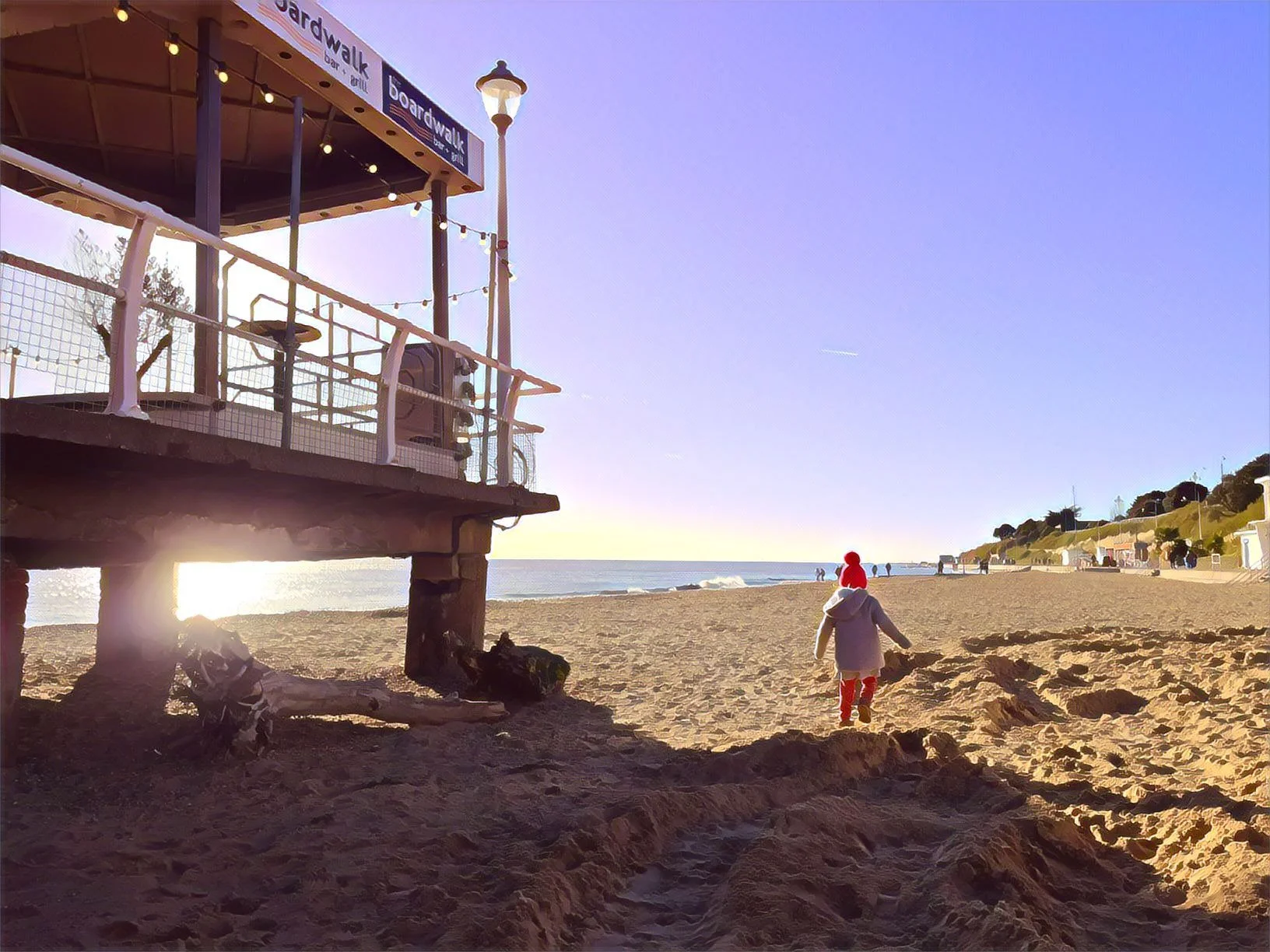
For hope itself, we need look no further than young people. As a dad to a young daughter, I see the natural spirit of children every day: how joyful they are, how brilliant, how curious. They see everything. They poke, they prod, they build. My firm belief is that our reasons for hope should always lie with the generations coming after us. If we can raise children well, which I think is the most important thing any of us can do, then we can have real hope that the future will be better than the past, and that our mistakes will be learned from rather than repeated.
This isn’t the place for a big anthropological breakdown of the generations, and I’m not qualified to give one anyway. But as a rough rule of thumb, every generation has done some things well and some things less well. The novelist Chimamanda Ngozi Adichie, in her wonderful TED talk, said that “the problem with stereotypes is not that they are untrue, but that they are incomplete.” That feels about right to me.
It’s easy for my generation to criticise the boomers, and you see plenty of it, but they are also among the most conscientious, hardworking and principled people you could hope to meet. My generation, the millennials, were encouraged to do the inner work, and I think a lot of us did. Where we fell short, if think, is that we didn’t do enough to make the systems around us better. We may not have the wealth of the boomers, but we have had it easier than those coming after us, and I think that brings a responsibility with it.
That’s where I think Generation Z are doing better than we did. Many people label them snowflakes, and no generation is perfect, but they have also had to grow up with technology and social media in their pockets from the start, which my generation, thankfully, never did. They are doing the inner work and asking for the systems to change, and they’re doing it while carrying something none of us had to carry at their age.
And my daughter’s generation? I think they’ll have the benefit of this insight. We now know what social media does to a young mind, and I believe we’ll have the safeguarding and the astuteness to protect them from it in a way that nobody could protect Gen Z.
That’s why we go into schools, and why we run courses to show young people just how much of a change they can be in the world. At the time of writing, my daughter is six years old, and I can see all of her potential. The only thing that will stand in the way of it is the world. Our job is to stop the world from doing that.
So this is where my hope lives: in the generation that’s here, and the generation that’s coming. But it isn’t the passive kind. Nothing about raising children well, or fixing the systems we leave to them, happens on its own. Active Hope is a decision, and we have to make it again every morning, often before we feel like it. My Grandad made that decision every day of his life, as far as I could tell, and he never seemed to find it a burden. He just got on with it, joyfully. I’d like us all to do the same.
Thank you for reading. Take care of yourself and others.
Much love,
Benjamin
If you’d like to explore your light and live your most purposeful life, we have a meaningful course called Living With Purpose. You can learn more here.
We’ve had the joy of running it since 2017, and we’re about to release an online version. It's seven modules you can do at your own pace, with a notebook and a cup of tea. And if money is tight, just email us, and we’ll give it to you for free, no questions asked. Sticky Claws hasn't enrolled yet, but it’s early days.